
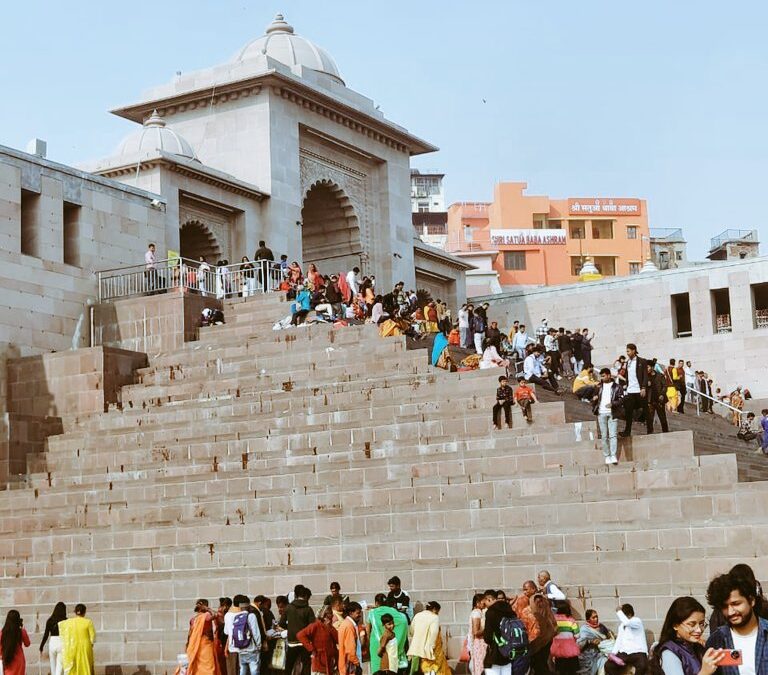
Pilgrimage city, the oldest living city, Varanasi is revered as a spiritual center for millions of devotees. Its sacred ghats along the Ganges River serve as a vital destination for those seeking spiritual enlightenment and purification through ritual bathing.
The oldest living city Varanasi
Just like the heart which takes in blood from various parts of the body and then pumps oxygenated blood back to the body, so does the Kashi Vishwanath temple in Varanasi, takes in throngs of pilgrims who pray before the deity and then disperse with their minds purified to visit another day. Just like the various chambers and valves of the heart regulating the blood flow, so do the various dwars of the temple regulate the unstoppable flow of the pilgrims.
A visit to Varanasi
In the winter of 2023, me and my wife were fortunate to visit the ancient and blessed city of Varanasi also known as Kashi and Banares, for the first time. Our trip did not begin on a positive note, as the hotel where we had booked our stay in, simply refused saying that it is full. Our protestations fell on deaf ears, asking us to contact the app through which we had booked our stay. We did do that and we did get the refund but where were we now going to stay for the next 3 days?
I had no other option but to contact one of my company clients and plead with him to give us some other hotel contact details. When he helped us find a room successfully, both of us thanked him profusely and were now convinced that it was the Lord himself who had helped us through one of his local devotees.
Once we had settled, we stepped outside for our first visit to a temple. We decided to first visit the Kaal Bhairav temple. That’s when the realization that Varanasi is a crowded city, first hit us. The traffic was chaotic with a profusion of cycle rickshaws. We decided to hire one but he asked for Rs. 100 to take us there. First we haggled with him to reduce in the best traditions of Mumbai but finally relented, agreeing to pay him at the temple. And were we relieved! For the temple was at a distance of atleast 5 km and the cycle rickshaw driver was straining his leg muscles to take us there through the unrelenting traffic. We were truly ashamed that another human being was doing this manual labour just to take us to our destination. Though we did use cycle rickshaw later as well, we did not haggle for fare reduction again. And while returning back to the hotel, we walked down the entire distance.
The Kaal Bhaira temple is quite ancient and huge crowds tthronged, though moving towards the temple in a disciplined manner. We entered, prayed before the deity, and in a few moments we were out as there were many pilgrims who followed us, patiently waiting for their turn.
The oldest living city Varanasi
Early morning next day, we made our way toward the Kashi Vishwanath temple without having any breakfast, deciding to have one after the darshan. It was as if the entire humanity was moving towards the temple. The atmosphere was electric, with cries of ‘Har har Mahadeo’ rending the air. Once we reached dwar no. 4, we saw that excellent arrangemenas were made for lockers, where we had to deposit our phones and wallets. Once this was done, we joined the throngs, standing in a queue.
As we were entering inside, the atmosphere turned sombre. It is bound to happen as one comes face to face with a destroyed yet imposing Mandir façade. Once inside the precincts, a clean, marbled vista welcomes you. Here too, you are rushed through the Darshan but you can do Abhishekam or a leisurely darshan at other smaller temples inside, which we did. We stayed inside the precinct for some time and then proceeded outside by way of the newly built Kashi Vishwanath corridor. While the corridor is huge and beautiful, one certainly notices the absence of any significant tree cover and most certainly it must be very hot during the summer. One also notices the elegant statue of the Maratha queen and respected Sadhvi, Ahilyabai Holkar, who is credited with rebuilding the Kashi Vishwanath temple, among many other temples and river ghats across many Hindu holy sites across north and west India.
The life giving Ganga
The first vision of the river Ganga is an experience in itself. The river flowing serenely, the small boats undulating on the river waters, the cacophony of the water birds, the river sands on the opposing bank, and the unending ghats, a different world altogether. We roamed from one ghat to another, watching pilgrims, Indian and foreigners alike, taking a holy dip in the holy river or various Sadhus, who sat along the ghats meditating or offering Jyotish services. As we neared the Manikarnika ghat, we paused, watching the sombre rituals, the burning pyres of the most sacred and oldest cremation grounds on the Ganga river and later made our way back towards our hotel.
The Ganga Aarti is an experience not to be missed. When we approached the Ghats in the evening twilight, it again felt as if the entire city was heading there. The street is taken over by many hawkers who have everything to sell. The atmosphere was electric and people were enjoying collecting the wares on offer. Though crowded, the crowds were never irritating and we enjoyed being part of that festival of humanity. Once we reached near the ghat some boys approached us to offer a view of the Ganga Aarti from their balcony, for a fee. Though skeptical at first, we did take their offer. They took us through narrow gulleys and then climbed narrower steps, to the gallery where some people were already occupying rickety, plastic chairs. We occupied similar chairs and waited for the Ganga Aarti to start. Starting with lighting of diyas, dozens and dozens of people approaching from the river side on small boats, both rowed and motorized, many people sitting in an orderly fashion very near to the Aarti stages, the atmosphere was charged with a pious spirit. The next 2 hours passed in a blur and we returned to out hotel, our piety truly sated.
The next day too, we visited the Kashi Vishwanath temple and roamed through the narrowest streets in the city, which are cleaned on a regular basis throughout the day to give pilgrims and casual visitors a truly memorable experience.
We truly felt one with the city, a sense of calm inspite of the thronging crowds, and could easily relate to the religious sentiments of generations of Indians who feel a unique connection to this city, which is known as a city of moksh attainment.